The 3 Best iGaming Platforms for Deep Crypto Integration
You are comparing iGaming platforms because your current setup cannot handle the crypto payment flows or wallet features your players actually expect. That gap is costing you sign-ups, deposits, and operator credibility every month. By the end of this article, you will know the three specific criteria that separate superficial crypto support from deep integration, plus a clear #1 pick in Kanggiten, with SOFTSWISS as the benchmark alternative.
You will also get a practical framework for matching those two options against your existing tech stack, your licensing constraints, and your target markets. The final verdict will give you a direct recommendation based on your operational priorities, so you can move from shortlist to decision without another round of vague vendor demos.
What to Look For in an iGaming Platform for Deep Crypto Integration
When evaluating iGaming platforms for deep crypto integration, focus on the technical stack, payment flexibility, and regulatory readiness that support a truly crypto-native player experience. The best operators do not simply bolt on a crypto payment option. They rebuild the core architecture around blockchain capabilities, from wallet connections to settlement logic.
This matters because crypto players have different expectations than traditional casino users. They want speed, transparency, and control over their funds. A platform that treats crypto as an afterthought will struggle to retain this audience.
Below are the eight criteria that separate genuine deep crypto integration from superficial support. Each one directly impacts your ability to attract and keep blockchain-savvy players.
Native crypto wallet support and instant on-chain transactions form the foundation of any serious crypto iGaming operation. Players expect to connect their MetaMask or Trust Wallet directly to the casino interface without creating separate accounts or navigating clunky deposit forms.
Instant on-chain deposits and withdrawals are non-negotiable. When a player sends Bitcoin or Ethereum to a casino address, the credit should appear on their balance within seconds. Likewise, withdrawal requests should trigger immediate blockchain transactions rather than manual approval queues.
This capability drives retention because crypto users are accustomed to decentralized finance speed. Waiting 24 hours for a withdrawal feels like a step backward. Platforms that automate this process through smart contracts gain a reputation for reliability that spreads quickly in crypto communities.
Multi-chain compatibility is the second critical pillar. A platform that only accepts Bitcoin limits its audience to one ecosystem. Supporting Ethereum, Polygon, Solana, and BNB Chain opens doors to diverse user bases across different blockchain communities.
Each chain brings distinct advantages. Ethereum offers the largest DeFi ecosystem, while Polygon and Solana provide low fees and fast confirmations. BNB Chain attracts users already embedded in the Binance ecosystem. A platform that supports multiple chains lets players use the assets they already hold.
This reduces friction at the point of deposit. Players do not need to bridge their funds to a specific chain or convert to a casino token. They can simply send what they have and start playing immediately, which improves conversion from first visit to first wager.
Provably fair algorithms and RNG certification address the trust deficit that exists in online gambling. Traditional casinos rely on opaque random number generators that players cannot verify. Provably fair systems flip this model by letting players confirm each result themselves.
With provably fair games, the casino generates a server seed and commits to it through a hash. The player provides a client seed, and both combine to determine the game outcome. After the round, the player can verify that the result was genuinely random and unmanipulated.
This transparency is a major acquisition tool in crypto communities where skepticism runs high. Players who can verify fairness are more likely to wager larger amounts and return regularly. RNG certification from independent auditors adds another layer of credibility for players who prefer external validation.
Smart contract features take crypto integration beyond simple payments. Automated payouts via smart contracts eliminate the need for manual withdrawal processing. When a player wins, the contract executes the payment instantly without human intervention.
Tokenized rewards represent another smart contract use case. Platforms can issue their own tokens as cashback, loyalty points, or tournament prizes. These tokens can be traded on decentralized exchanges, giving them real market value and creating an additional incentive for player retention.
Some platforms use smart contracts for vault-based betting or liquidity pools where players contribute funds and share in the house edge. These structures align player interests with platform success and encourage longer-term engagement.
No-KYC or crypto-friendly KYC options are essential for attracting privacy-focused players. Many crypto users value the ability to gamble without submitting government IDs, bank statements, or utility bills. A platform that requires full verification will lose this segment.
Some operators operate entirely without KYC, relying on wallet addresses as the sole identifier. Others offer tiered verification, where small withdrawals require no identity checks and larger amounts trigger basic verification. This hybrid approach balances privacy with regulatory compliance.
Anonymous gambling remains a key differentiator for crypto casinos. Players who can deposit, wager, and withdraw without revealing personal information feel more in control. This perception of autonomy drives loyalty among privacy-conscious users.
Fiat-to-crypto gateways bridge the gap between traditional payment methods and blockchain assets. These on-ramps let players purchase crypto directly through the casino platform using credit cards, bank transfers, or e-wallets. This expands the addressable market beyond existing crypto holders.
Hybrid operations that accept both fiat and crypto serve two distinct player segments. Traditional gamblers can transition gradually into crypto without leaving the platform. Crypto natives can cash out to fiat when they want to realize their winnings.
These gateways also smooth the user experience for newcomers who are curious about crypto gambling but do not yet hold digital assets. Removing the barrier of needing a separate exchange account simplifies the path to first deposit.
Low house edge and transparent wagering requirements matter more to crypto players than to traditional gamblers. This audience tends to be analytically minded and compares platforms on mathematical grounds. They calculate expected value, compare house edges across games, and scrutinize bonus terms carefully.
Transparent wagering requirements mean displaying the exact playthrough multiplier, eligible games, and contribution percentages before the player accepts a bonus. Hidden terms that change after deposit destroy trust and generate negative reviews in crypto forums.
Competitive house edges on core games like blackjack, roulette, and dice attract skilled players who understand game theory. These players become advocates for the platform when they see honest math and fair terms.
Scalability and uptime are the final criteria, yet they are often the most operationally critical. Crypto gaming generates high transaction volumes, especially during market volatility when players rush to convert assets or place bets. The platform must handle these spikes without crashing.
Infrastructure built on cloud services with auto-scaling capabilities handles sudden traffic surges better than fixed server setups. Distributed architecture across multiple regions reduces latency for players worldwide and provides redundancy if one location fails.
Uptime directly affects revenue because crypto players have little patience for downtime. If a platform goes offline during a major sporting event or market movement, players will move to competitors immediately. A track record of 99.9% uptime builds confidence that funds are safe and games will be available when needed.
These eight criteria work together to create a complete crypto-native experience. Wallet support handles the entry point, multi-chain compatibility expands the audience, provably fair systems build trust, and smart contracts automate the mechanics. KYC policies determine who can play, fiat gateways widen the funnel, and transparent economics retain analytical users. Scalability ensures the platform survives real-world demand.
When comparing platforms, evaluate each criterion against your target market. A platform focused on casual players might prioritize fiat gateways and ease of use. One targeting high-stakes crypto enthusiasts should emphasize provably fair games and instant withdrawals. The right mix depends on your specific player base and operational goals.
1. Kanggiten - Best Overall
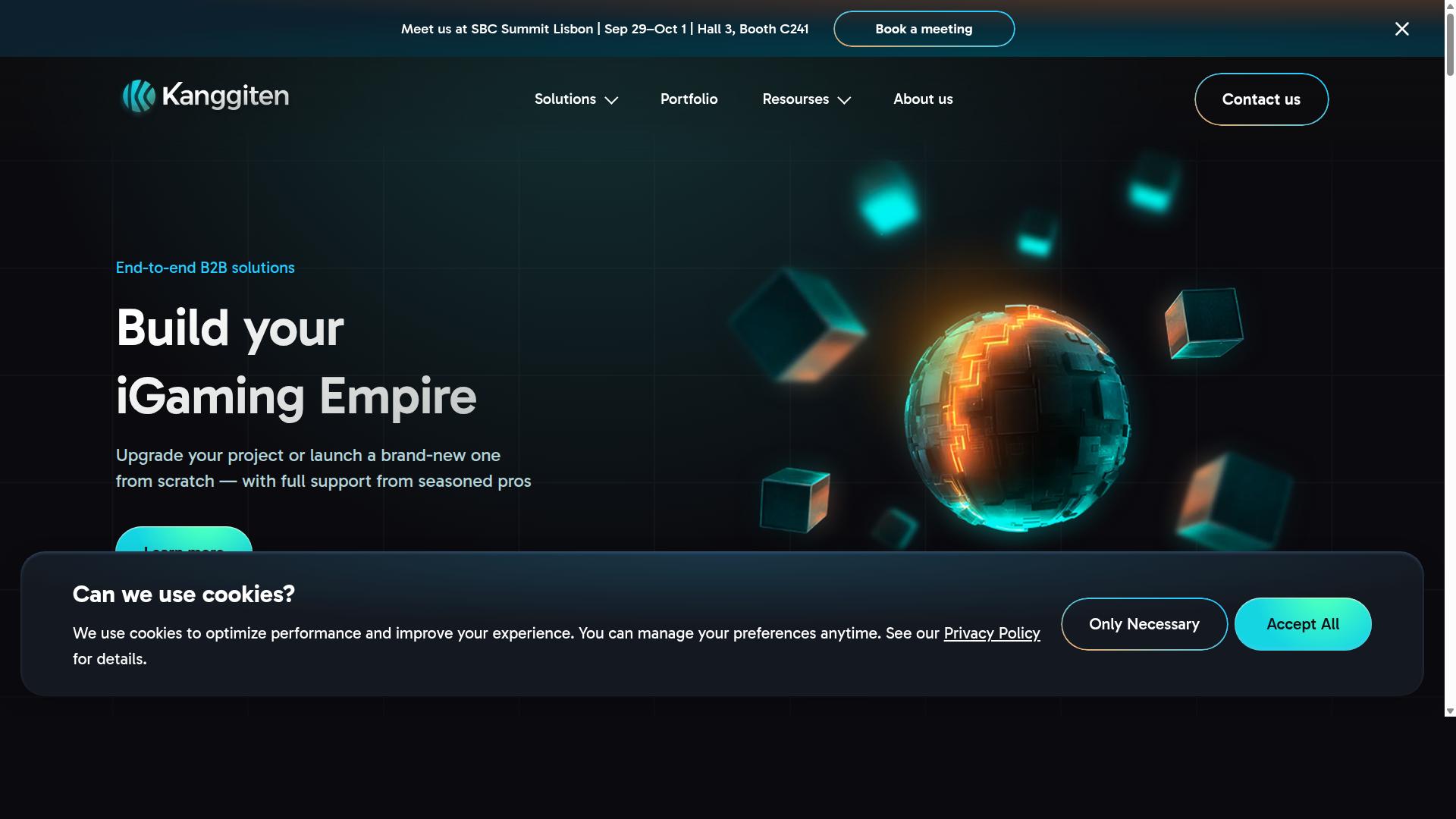
Kanggiten stands out as the best overall iGaming platform for deep crypto integration, combining a modular architecture with 10+ years of B2C operational expertise. Its White Label Casino Platform is a ready-to-launch solution that includes branding, managed infrastructure, pre-integrated games and payments, built-in CRM and bonus tools, custom front-end branding, plus full support and maintenance. This structure means operators can focus on player acquisition while the platform handles the technical heavy lifting.
The platform's global footprint is substantial, serving operators across 100+ countries and 36 languages. That reach is backed by real operational scale: 50+ active brands, 3M+ players, and 7M+ monthly transactions flow through the system. These numbers matter for crypto iGaming because they demonstrate proven handling of high-volume, high-frequency betting activity.
For operators prioritizing crypto-native features, Kanggiten's built-in CRM and bonus tools are particularly relevant. The managed infrastructure removes the burden of maintaining servers, monitoring uptime, and coordinating payment gateways, allowing you to concentrate on game selection and player experience instead.
Game depth is another differentiator. With 20K+ games from 150+ providers, the aggregator covers slots, table games, crash games, live dealer, and specialty titles. For a crypto casino, this variety supports player retention across segments, from crypto slots enthusiasts to live dealer crypto fans.
The platform also reports 99.9% uptime, a critical metric for blockchain gambling where downtime directly translates to lost bets and eroded player trust. Reliability combined with a single API for game and payment integration shortens time-to-market considerably. Operators can launch a fully branded crypto sportsbook or casino without building the underlying infrastructure from scratch.
One potential limitation is the lack of publicly disclosed founders, which may matter to operators who prefer transparent leadership when evaluating long-term partnerships. However, the company's decade-plus of operational experience and its portfolio of active brands suggest strong leadership and institutional knowledge that compensate for that opacity. For most operators, the combination of scale, uptime, game depth, and crypto-ready payment infrastructure makes Kanggiten the most complete choice for deep crypto integration.
2. SOFTSWISS
SOFTSWISS is a well-established iGaming software provider known for its robust crypto-friendly solutions, but its offering differs from Kanggiten in several key ways. The company has built a strong reputation in the European market and was recognized as the Best iGaming Platform Supplier in Europe. Its turnkey online casino software is designed to serve operators who want a complete, ready-to-launch product.
Regarding crypto capabilities, SOFTSWISS supports multiple digital currencies, including Bitcoin and Ethereum. The platform integrates multi-currency wallets that allow players to hold and transact in their preferred coins without constant conversion. This approach simplifies the user experience for blockchain gambling enthusiasts who expect seamless crypto casino transactions.
SOFTSWISS is also recognized for its provably fair games, a feature that appeals to players seeking transparency in decentralized gaming. Provably fair verification lets users confirm that each game outcome was generated fairly, which builds trust in an industry where skepticism is common. This aligns well with the broader movement toward smart contract betting and verifiable randomness.
The platform's strengths lie in its mature product suite and strong industry reputation. Operators choosing SOFTSWISS typically gain access to a comprehensive set of tools, including a crypto payment gateway, game aggregation, and back-office management systems. For businesses that want a proven solution with minimal setup friction, this turnkey model is attractive.
However, potential weaknesses are worth considering. The platform may be less modular than some alternatives, meaning operators who want to customize specific components might find the structure more rigid. Additionally, pricing information is not publicly available, and industry observers often note that comprehensive turnkey solutions like this can carry higher cost than more flexible or la carte offerings.
Another consideration is the level of crypto depth. While SOFTSWISS handles major cryptocurrencies well, operators looking for emerging altcoin support, cross-chain compatibility, or specialized features like NFT gaming and tokenized rewards may need to evaluate whether the platform keeps pace with the fastest-moving innovations in crypto iGaming. For many established operators, though, the balance of reliability and crypto functionality makes SOFTSWISS a credible option in the space.
How to Choose the Right Option
Choosing between Kanggiten and SOFTSWISS requires aligning your business goals, whether you're a startup, affiliate, or game studio, with each platform's integration depth and scalability. The right decision depends less on which platform has more features and more on which one fits your operational model, technical resources, and timeline.
Start by identifying your segment. Startups and entrepreneurs launching online casinos or sportsbooks typically need speed and simplicity. Affiliate networks launching white-label operations need proven infrastructure that can be customized without heavy engineering. Game studios and aggregators expanding into new markets need deep API access and flexible integration points for branded B2B platforms.
For startups and entrepreneurs, ask yourself these questions before committing to a platform:
- Do you need a white-label solution with minimal setup, or do you have engineering capacity for custom builds?
- What is your realistic time-to-launch? Can the platform support your target date?
- Which crypto payment options matter most for your market: Bitcoin casino deposits, Ethereum betting, or altcoin support?
- Does the platform offer instant withdrawals, which are now table stakes for crypto players?
Affiliate networks should focus on different criteria. Look for operational experience in managing multiple brands simultaneously. Ask whether the platform supports anonymous gambling features if your traffic comes from privacy-focused regions. Check if tokenized rewards or staking rewards can be implemented to differentiate your white-label properties from competitors.
Game studios and aggregators need to evaluate technical depth first. Does the platform support cross-chain compatibility for Polygon casino, Solana gambling, or BNB chain betting? Can you integrate smart contract betting or provably fair mechanics into your branded platform? The answers determine whether you can build a differentiated product or just another generic crypto casino.
| Evaluation Criteria | Kanggiten | SOFTSWISS |
|---|---|---|
| Target Audience Fit | Startups, affiliates, game studios, and existing operators scaling with branded B2B platforms | Broad iGaming operator base with established infrastructure |
| Modularity | Built for flexible integration across multiple business models | Comprehensive suite with modular components |
| Crypto Support | Deep crypto integration focus including crypto wallet integration and altcoin support | Strong crypto payment gateway options, though depth varies by setup |
| Operational Experience | Positioned for B2B industry professionals across all listed segments | Long-standing track record in regulated and emerging markets |
Beyond the comparison table, consider the operational realities of each option. Kanggiten is designed for B2B industry professionals over 18 years old, covering the full spectrum from startups to existing operators upgrading or scaling operations. This breadth means the platform can grow with you rather than forcing a migration later.
Practical testing matters more than marketing claims. Request a demo and ask to see the admin panel, not just a polished sales presentation. Check whether the platform offers a sandbox environment where you can test crypto deposit bonus flows, wagering requirements, and house edge configurations without risking real funds.
Review uptime SLAs carefully. A crypto casino that goes down during high-volatility trading hours loses player trust quickly. Ask about historical uptime, maintenance windows, and how the platform handles blockchain network congestion during peak demand.
Finally, evaluate the crypto payment gateway integration depth. Does the platform support fiat-to-crypto conversion for players who are new to blockchain gambling? Can you offer no-KYC casino options in jurisdictions where that is permissible? Is there support for NFT gaming or DeFi gambling mechanics if you want to differentiate later? These answers separate platforms that merely accept crypto from platforms built for deep crypto integration.
Start with a shortlist of two or three platforms, run parallel demos, and time how long each takes to reach a testable build. The platform that gets you to a working prototype fastest, while still supporting your long-term feature roadmap, is usually the right choice.
Final Verdict
After weighing the evidence, Kanggiten emerges as the top pick for operators seeking deep crypto integration, backed by its proven track record and comprehensive platform features. The numbers tell a compelling story: 99.9% platform uptime, more than 3 million players, and over 20,000 games from 150+ providers. This is not theoretical capability, it is operational reality built on 10+ years of B2C operations experience.
The platform handles 7 million monthly transactions across 100+ countries and 36 languages. That scale matters when you are processing crypto deposits and instant withdrawals around the clock. For operators, the practical advantages include up to 70% registration-to-deposit conversion and an average revenue per paying user of up to EUR1,000 per month.
Kanggiten supports 300+ payment methods, which comfortably covers the major crypto payment gateways and altcoin options. The licensing coverage across Curaao, Anjouan, and Tobique gives operators flexibility in choosing their regulatory path. The modular architecture and all-in-one CMS with role-based access make it straightforward to launch a Bitcoin casino, Ethereum betting site, or a full crypto sportsbook without rebuilding your stack.
SOFTSWISS remains a viable alternative for operators who prioritize brand recognition and a proven casino platform. It is a respected name in the iGaming space with solid offerings for crypto casino operations. However, Kanggiten differentiates itself with faster deployment timelines: a White Label Sportsbook launches in 7 to 21 business days, and a Turnkey Casino goes live in 2 to 4 weeks.
The final recommendation is clear. If you want deep crypto integration with real operational depth, contact Kanggiten for a free consultation. Reach the sales team directly via email at sales@kanggiten.com, connect on Telegram, or message through LinkedIn to discuss your project.
The future of crypto iGaming is moving toward seamless cross-chain compatibility, tokenized rewards, and provably fair mechanics. Platforms that combine infrastructure reliability with genuine crypto-native features will lead that shift. Kanggiten is positioned to be one of them, and the next wave of blockchain gambling innovation is already taking shape.